The Architecture of Contact: A Manifesto
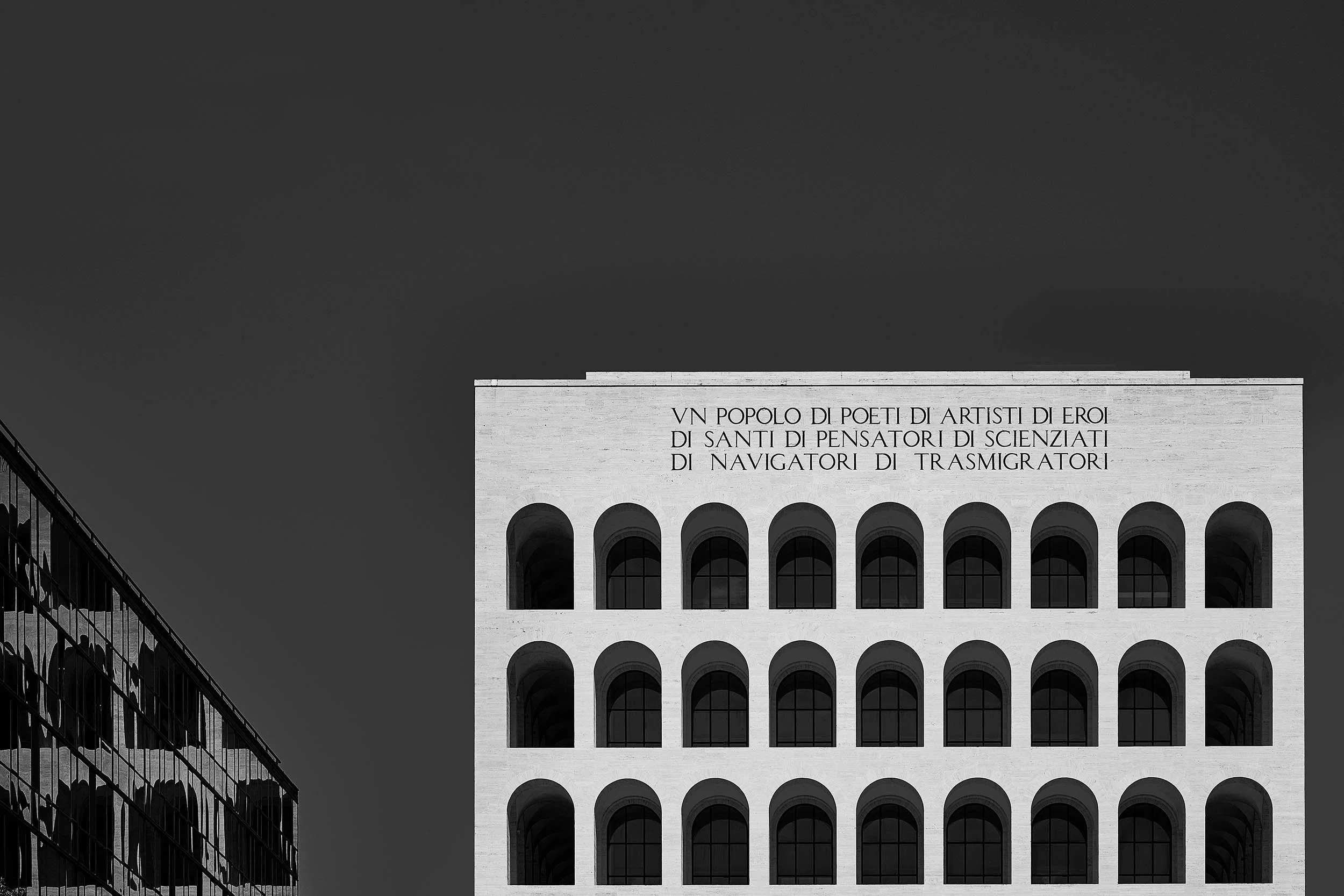
Architecture is never merely a backdrop. It is a living entity that is part of the human experience. We reject the two-dimensionality of the backdrop in order to seek a profound interaction between geometric precision and emotional unpredictability.
Friction (Architecture)
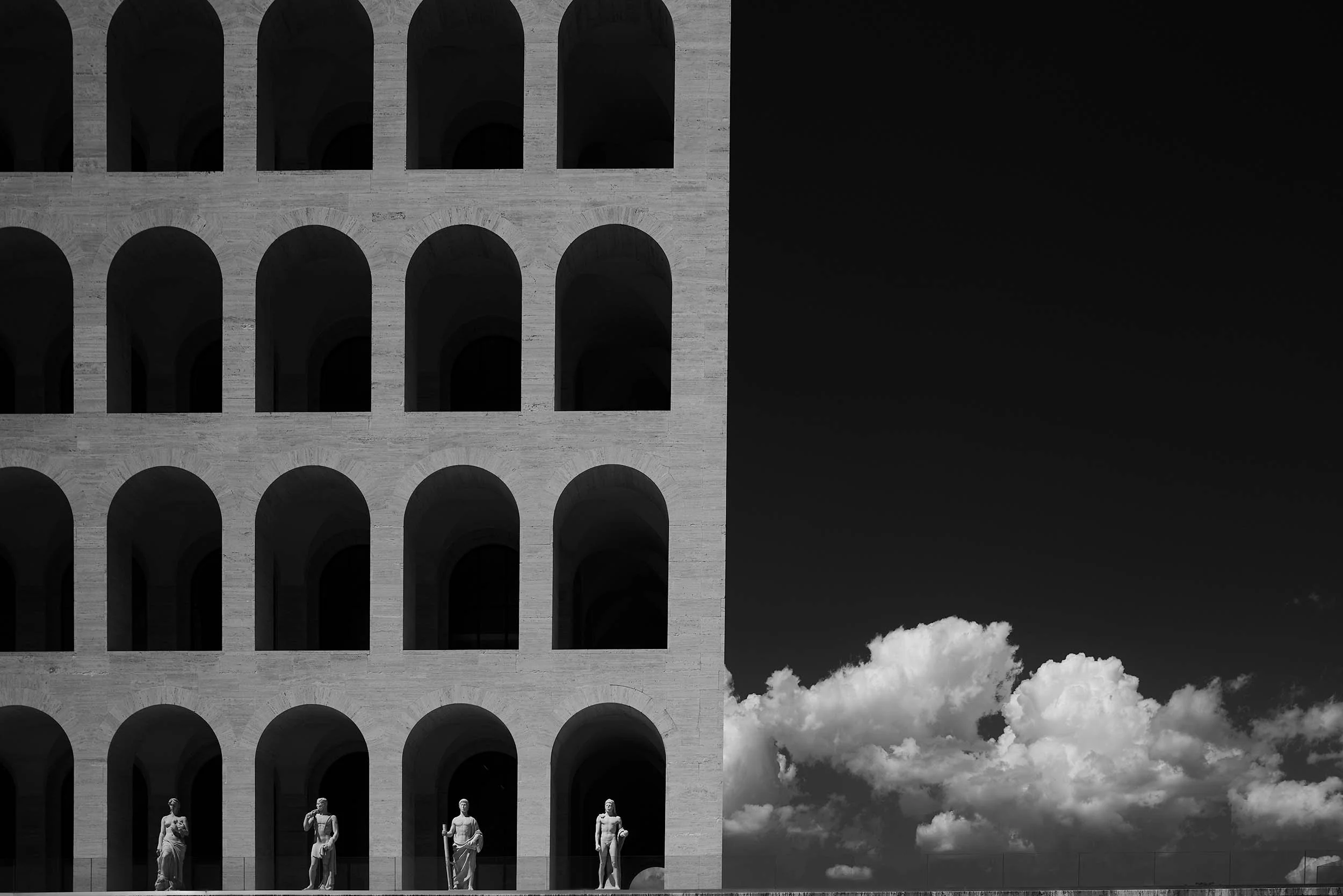
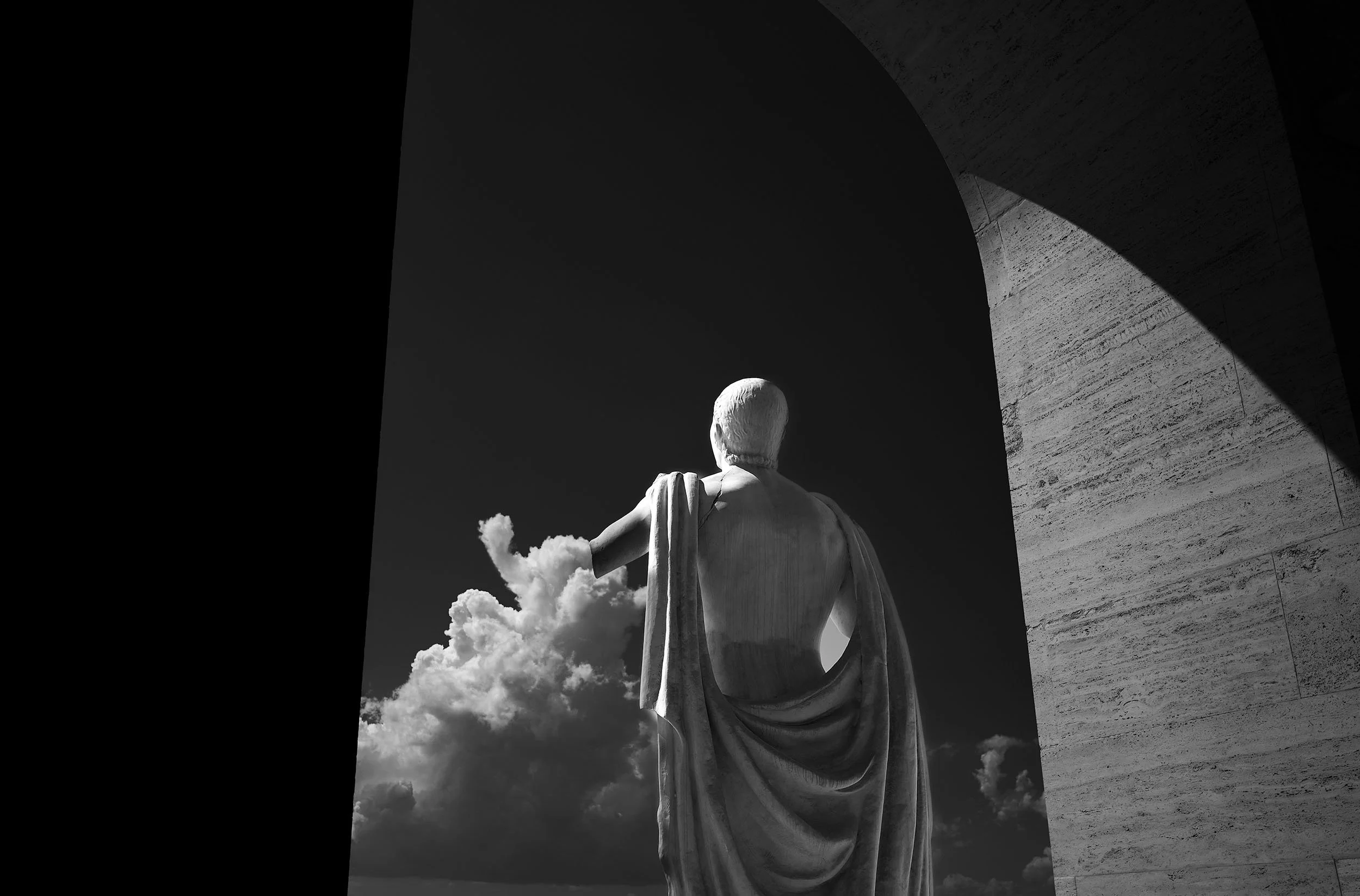
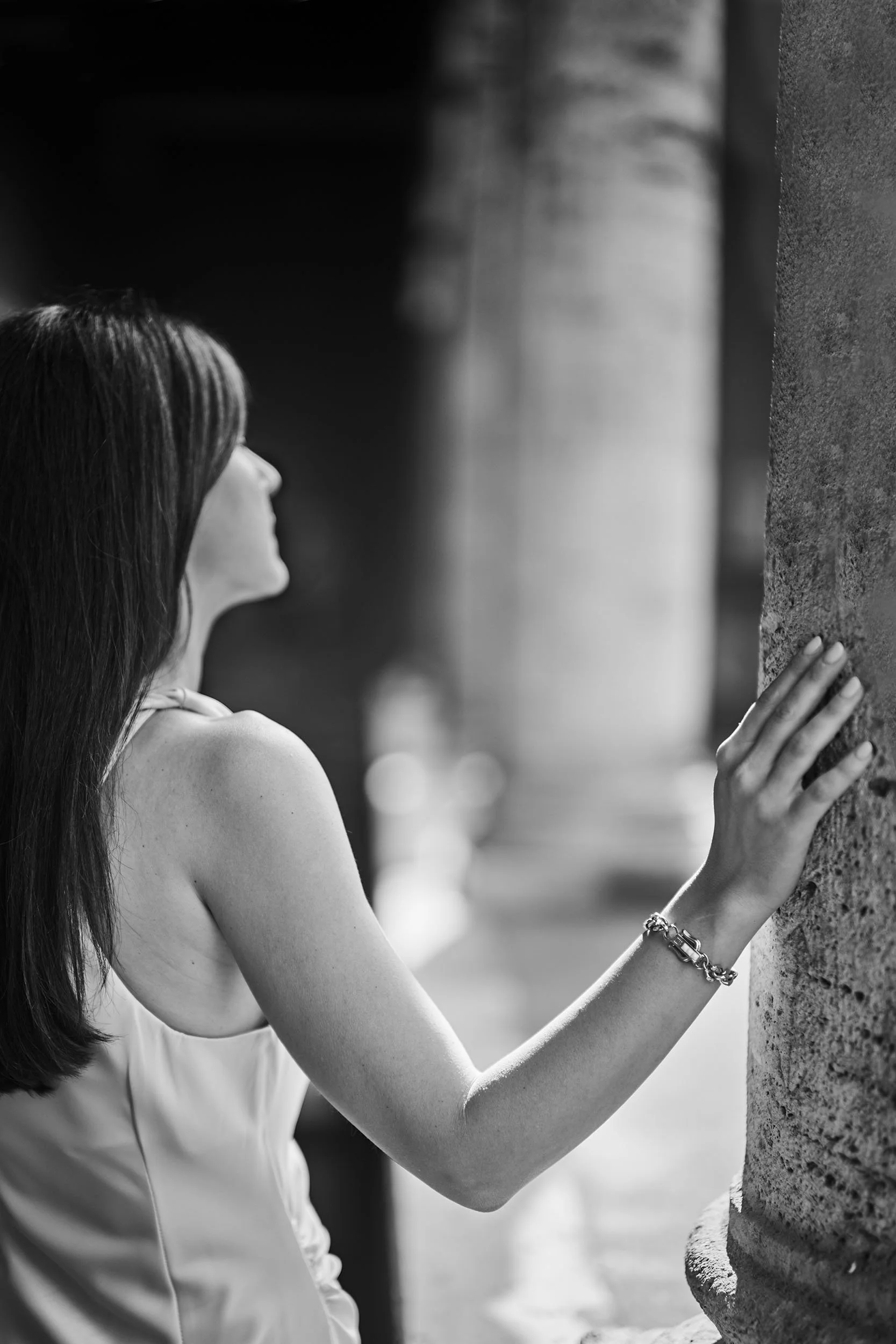
In the clash between the functional aesthetics of the 20th century and the human body, matter comes alive again. There is a point of balance where a foreign element—a line of travertine, a shadow, a light, a reflection, or the shadow of a statue—reaches out toward the subject—not to dominate, but to caress. The broken arm of a marble statue at the Palazzo della Civiltà, reaching toward the clouds, finds its earthly reflection in the skin of a human arm anchored to a column. This friction is the only truth we document.
The Void (Air)
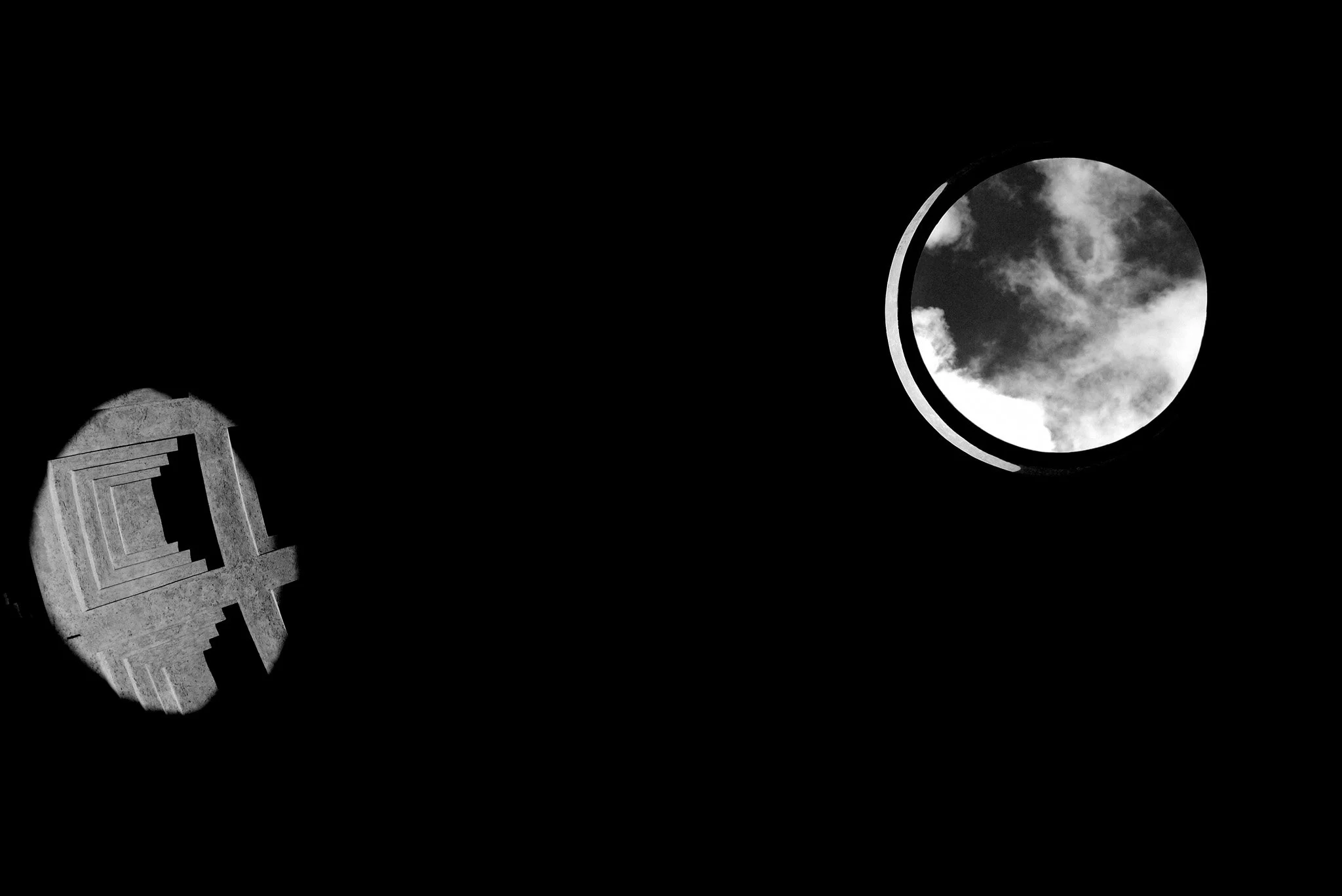
Air is not the absence of substance; it is the raw material of essence. It functions like the architecture of Ma (間): the charged distance between two bodies a moment before contact. We do not simply photograph architecture or people; we photograph the tension in the air that unites them, transforming a fleeting emotion into an icon.
Protection
Let us reclaim the shadow. Not as concealment, but as the guardian of essence. In a world flattened by standardized lights and superficial vision, the shadow restores depth and definition. It protects the gentle reaching out, safeguarding a private intimacy against the world’s emptiness.
Emancipation (The Crack)
Following Cohen’s concept of “the crack where the light enters,” we reject all forms of absolutism and champion the uniqueness of every story. Each narrative must find and occupy only its own authentic emotional space. Our goal is to break free from rigid representations, discovering the extraordinary within the geometric boundaries of reality, architecture, and the way they interact.