Ostia 2026: The Architecture of a Disaster Waiting to Happen.
Here, it is not just the urban boundary that is crumbling, but the relational infrastructure.
This is intended to be a visual exploration of the realm of relational breakdown, going beyond mere aesthetics.
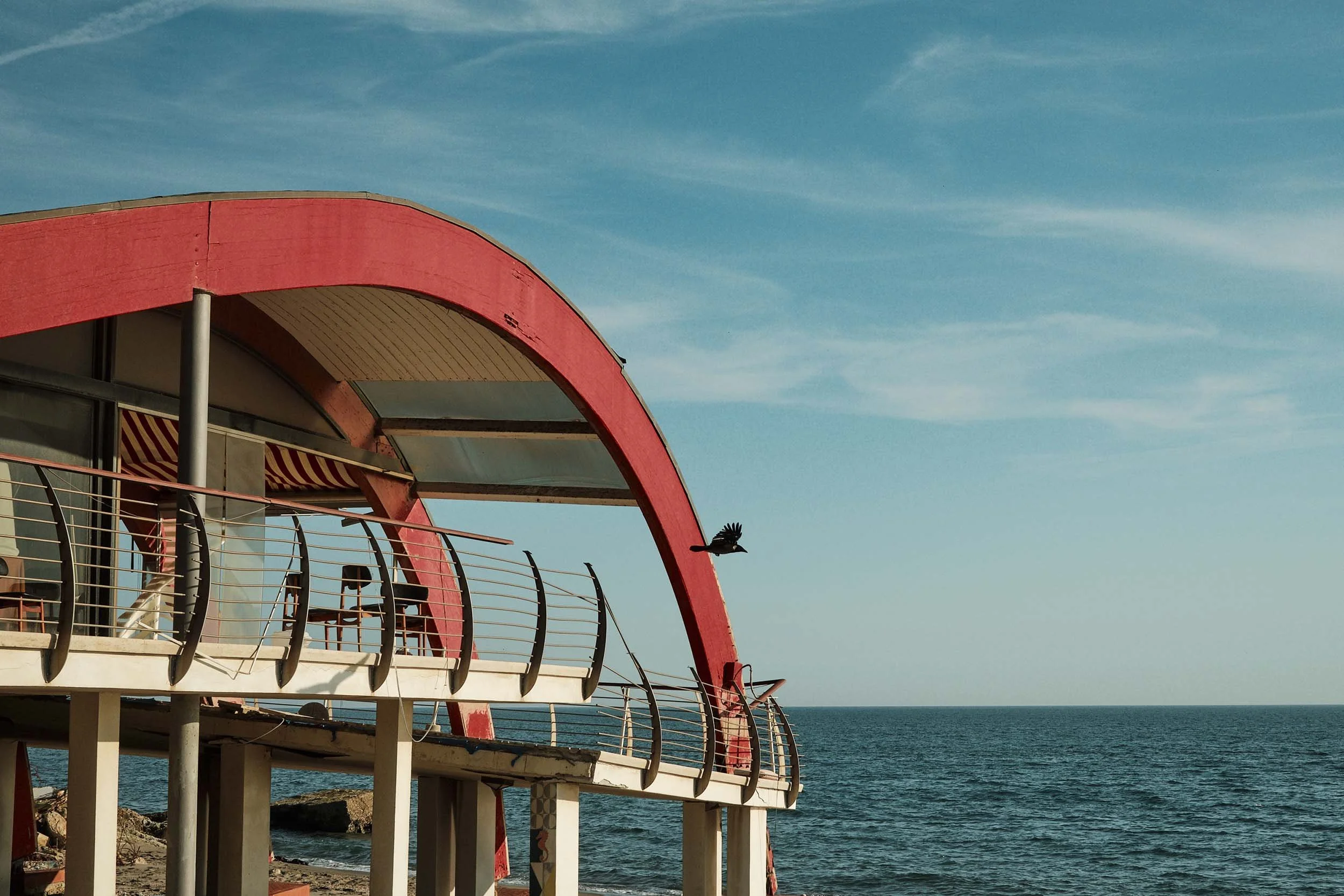
The role of aesthetics.
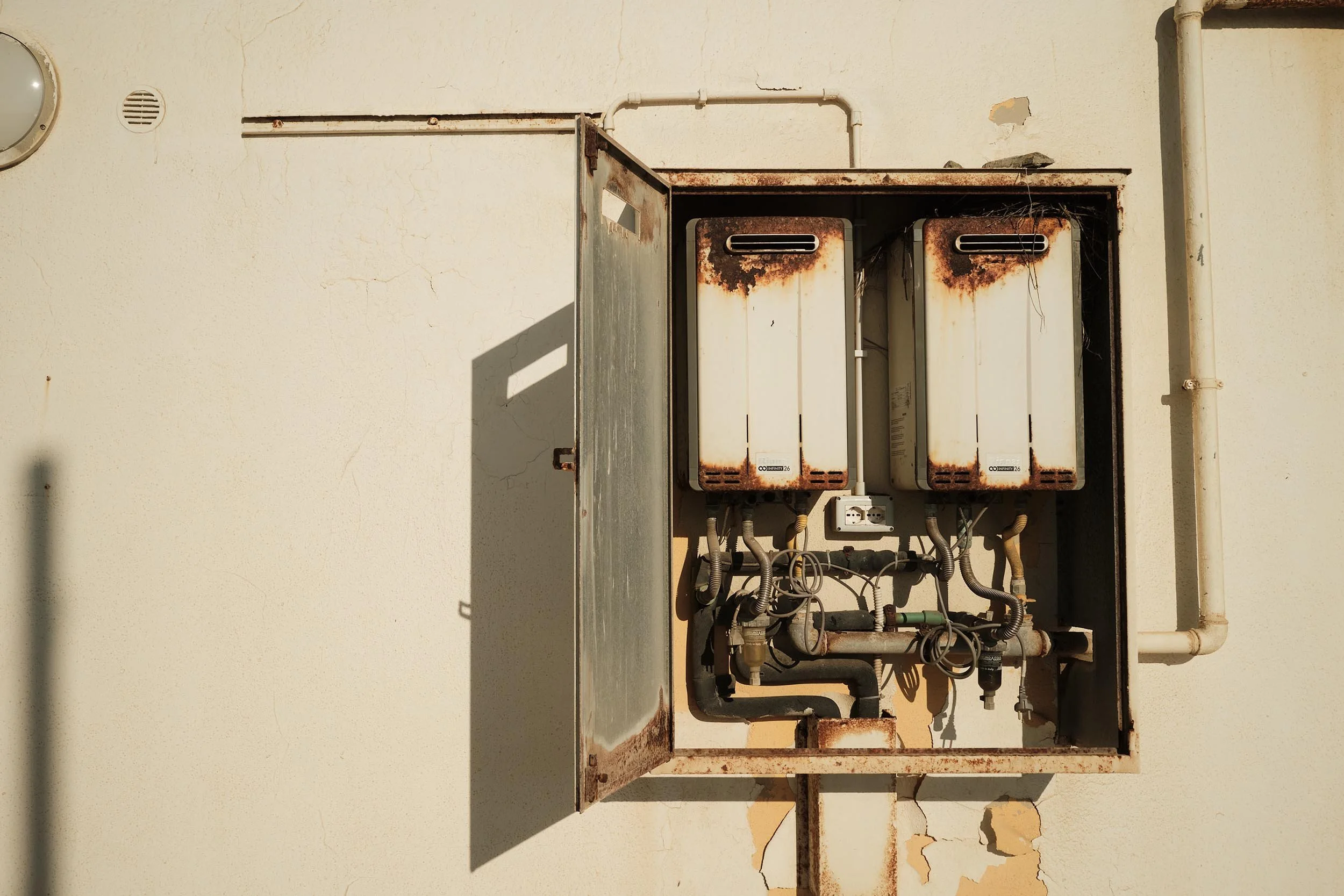
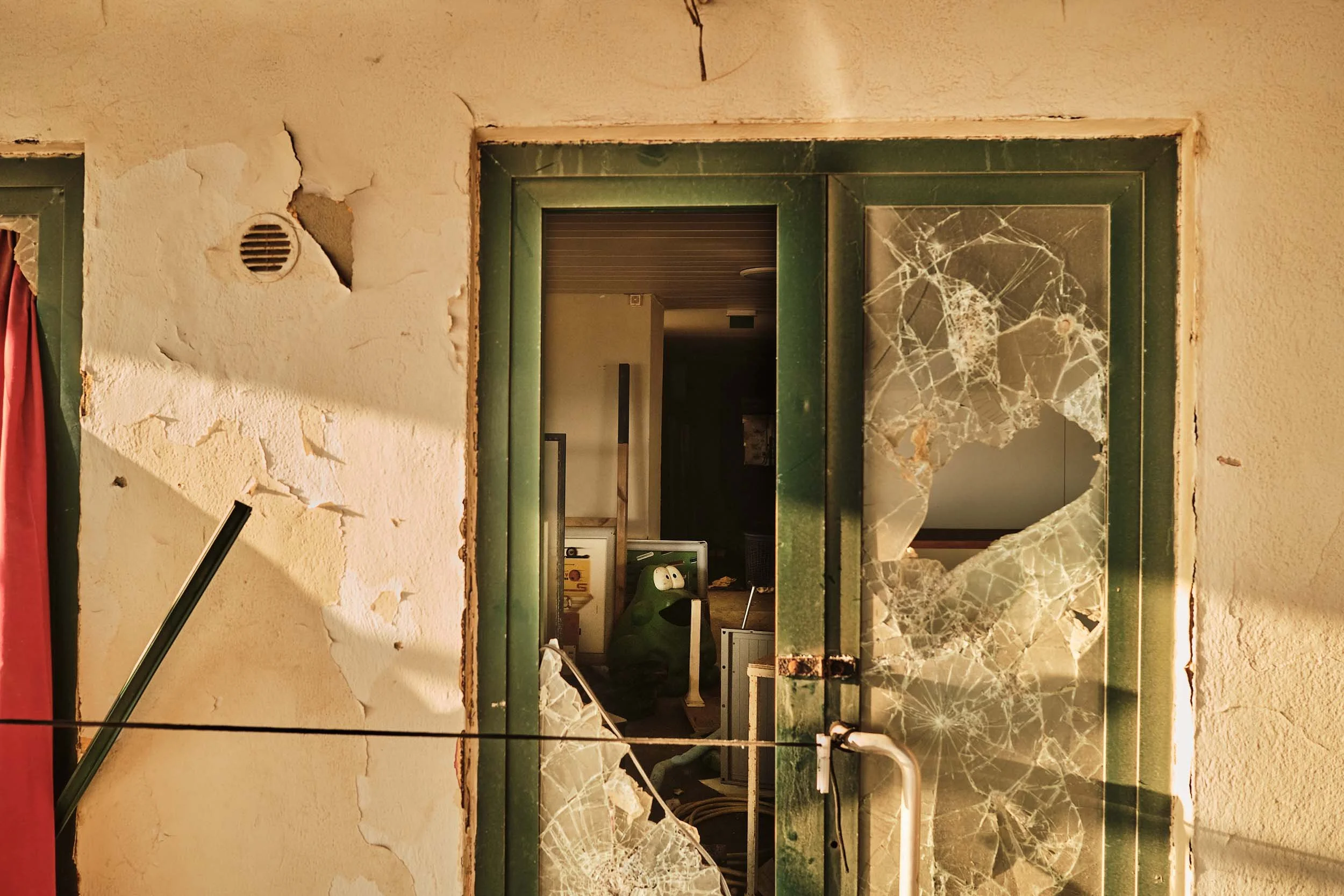
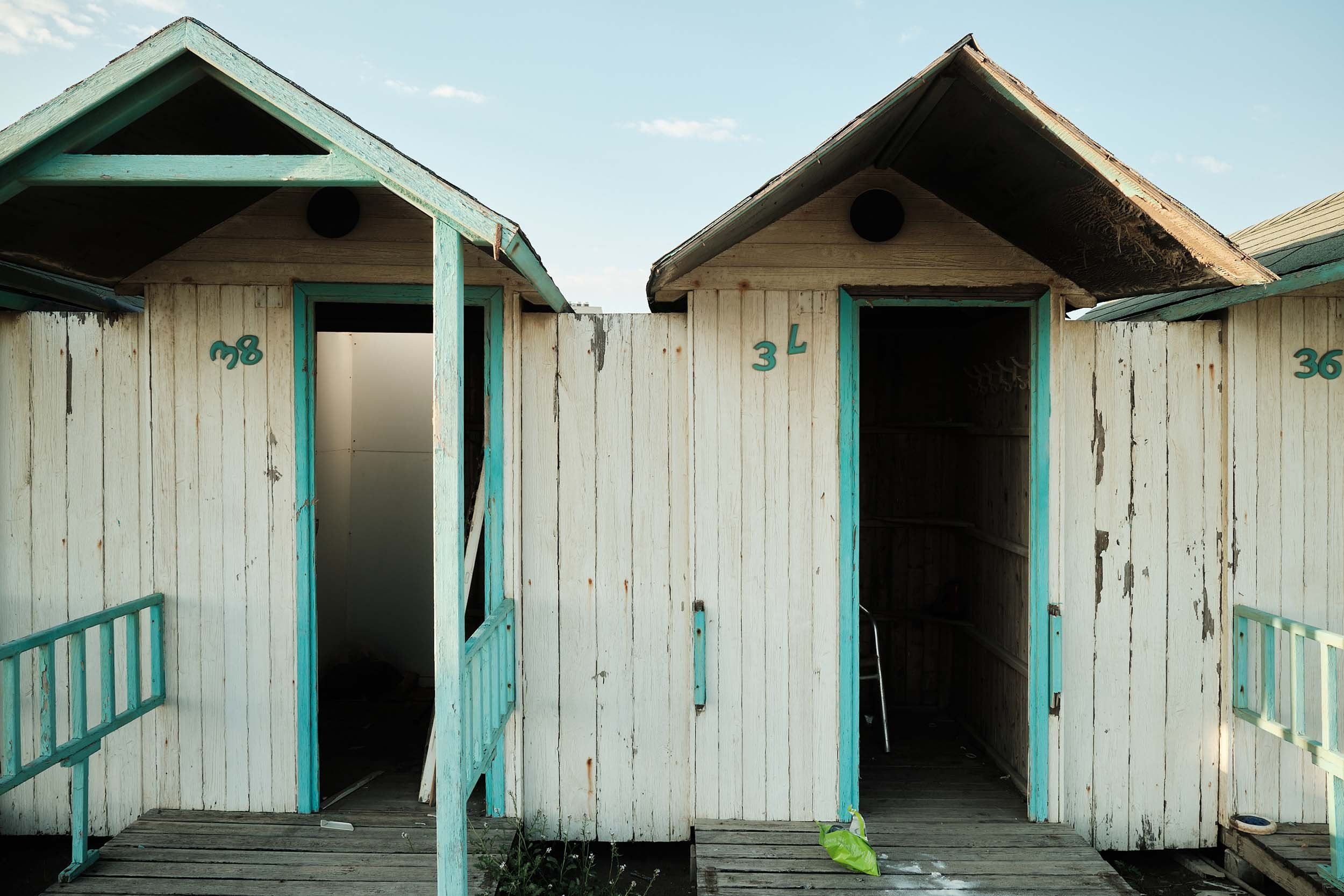
In this project, shot entirely with my beloved Fujifilm X100 VI and two additional 28mm and 50mm lenses, I deliberately sought to create an aesthetic and emotional dissonance between the devastation of the landscape and the inherent beauty of those colors, contrasts, shadows, and light. Through this paradox, I believe the visual impact is even more powerful. The starting point is the aesthetic of the superb, unique Kodachrome. A historic film that brought with it unique colors and contrasts.
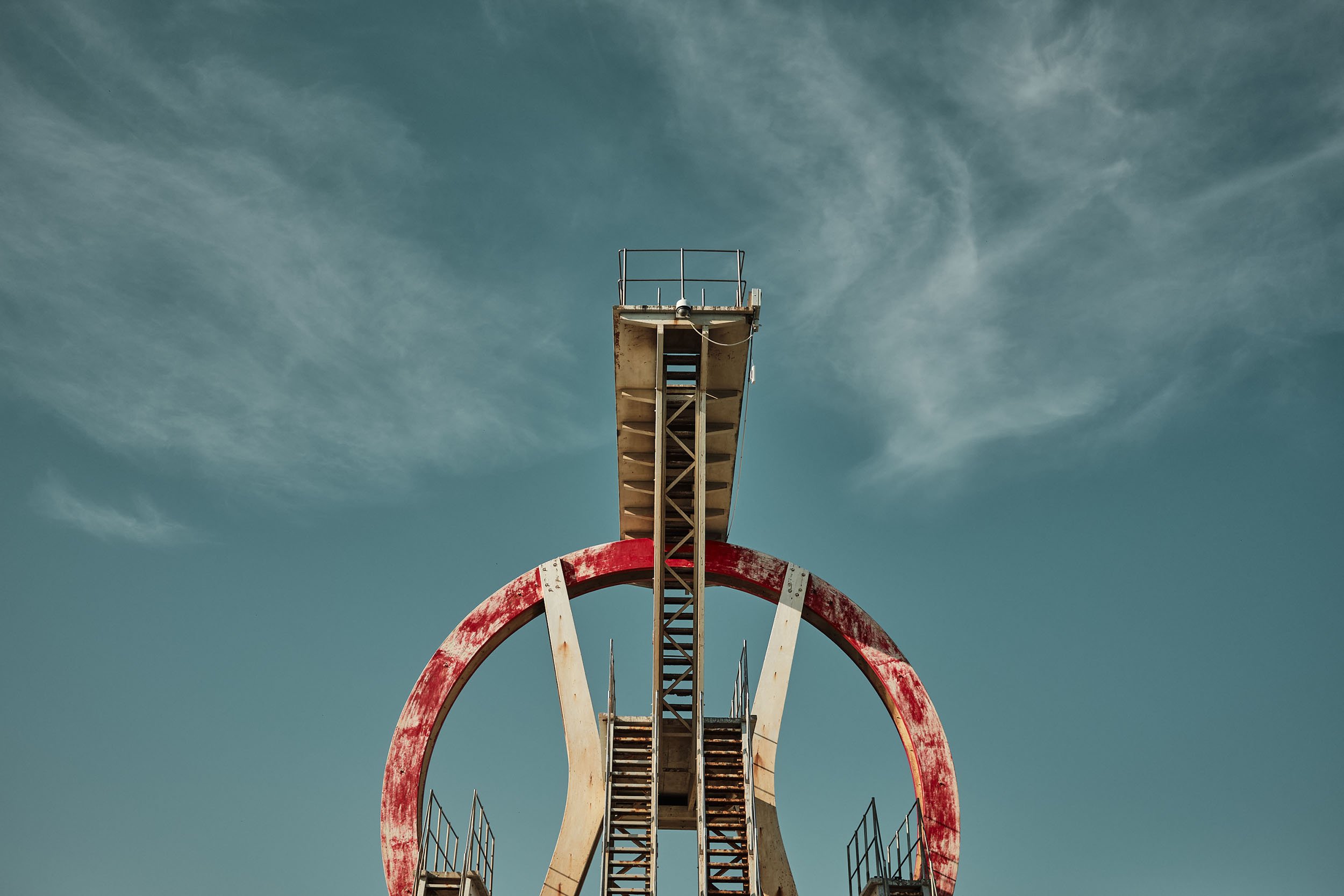
A sad story.
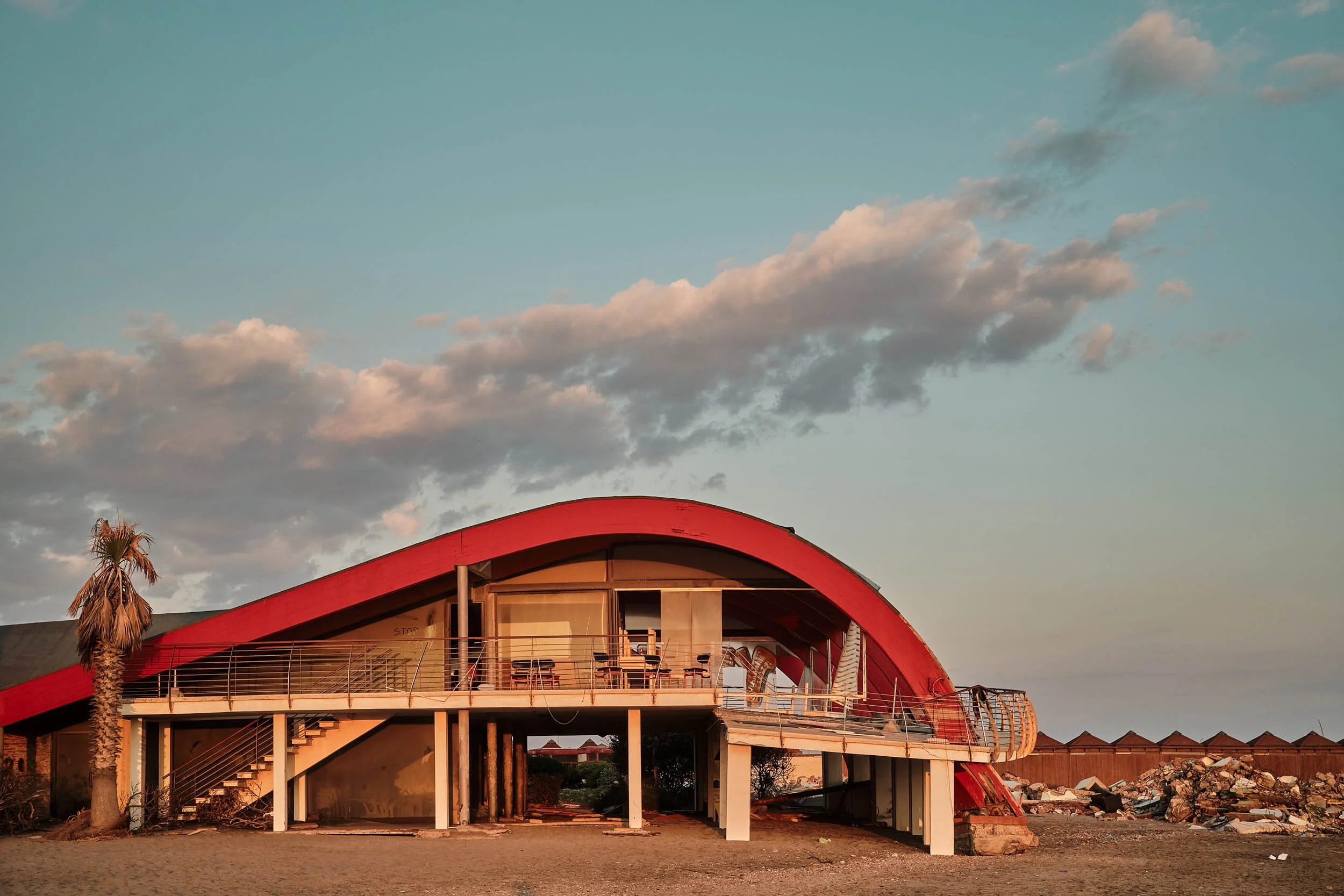
This is objectively a sad story. It’s hard to pin the blame on just one side. I think it’s up to us to try to take a step back, try to be objective rather than take sides. The fact is, seeing how the Kursaal building—with its iconic diving board designed by the renowned engineer Pierluigi Nervi—is now on the verge of complete collapse simply breaks my heart.
Or how a legal case literally tore “La Casetta” to pieces. Its former managers were fully acquitted. Can you believe the absurdity of a justice system that takes years to issue rulings?
Or wondering how the cantilevered terrace of the famous, beautiful “Sporting Beach” could have broken away so cleanly.
A conclusion.
The only conclusion we can draw is that we are facing a truly appalling situation—one that is far from over. It would be wise for all of us, as citizens, to stay vigilant. And in some way, we should demand answers from those in charge. Because this is an unacceptable mess—an architectural, relational, urban, judicial, and business mess. Ostia and Italy deserve better.
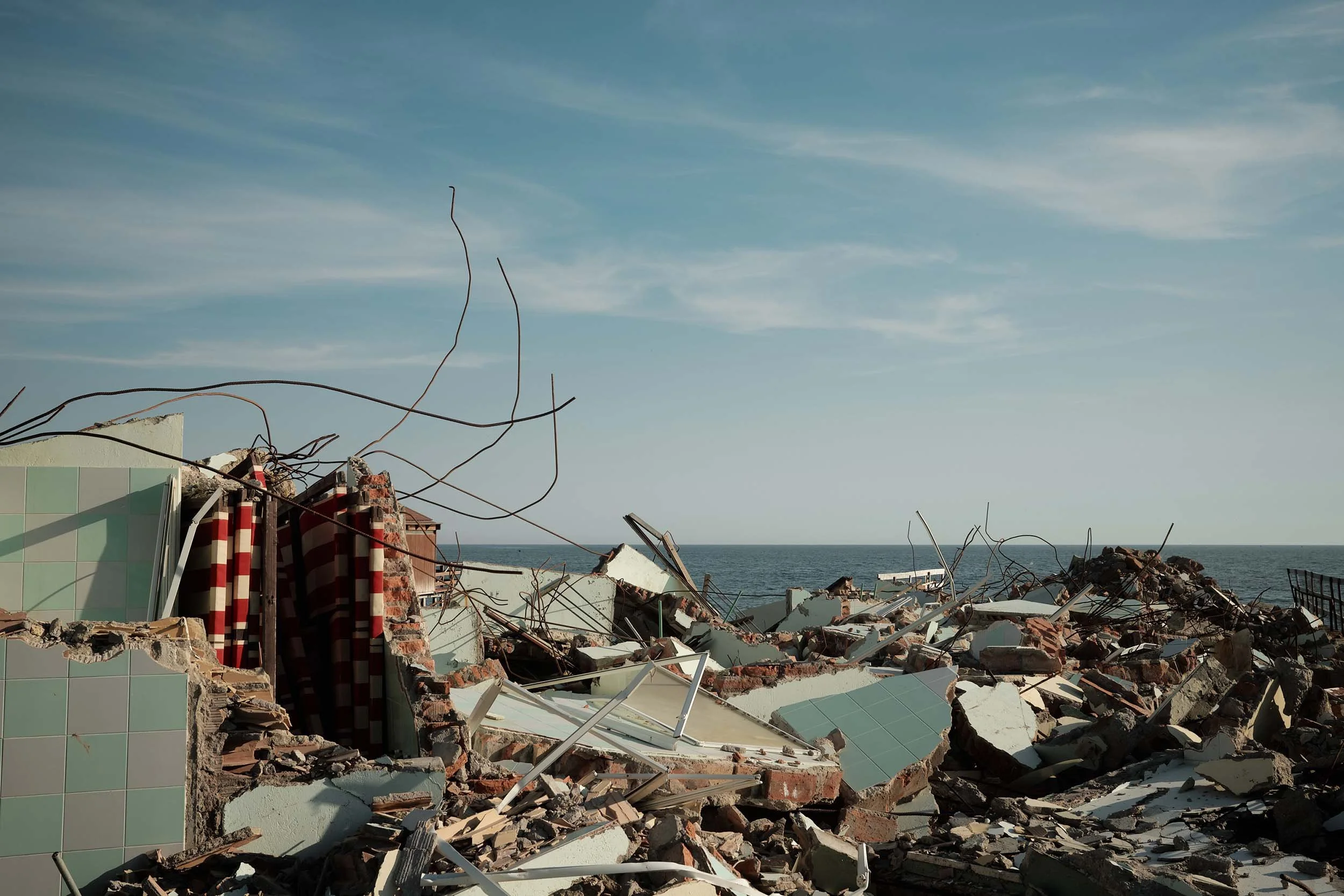
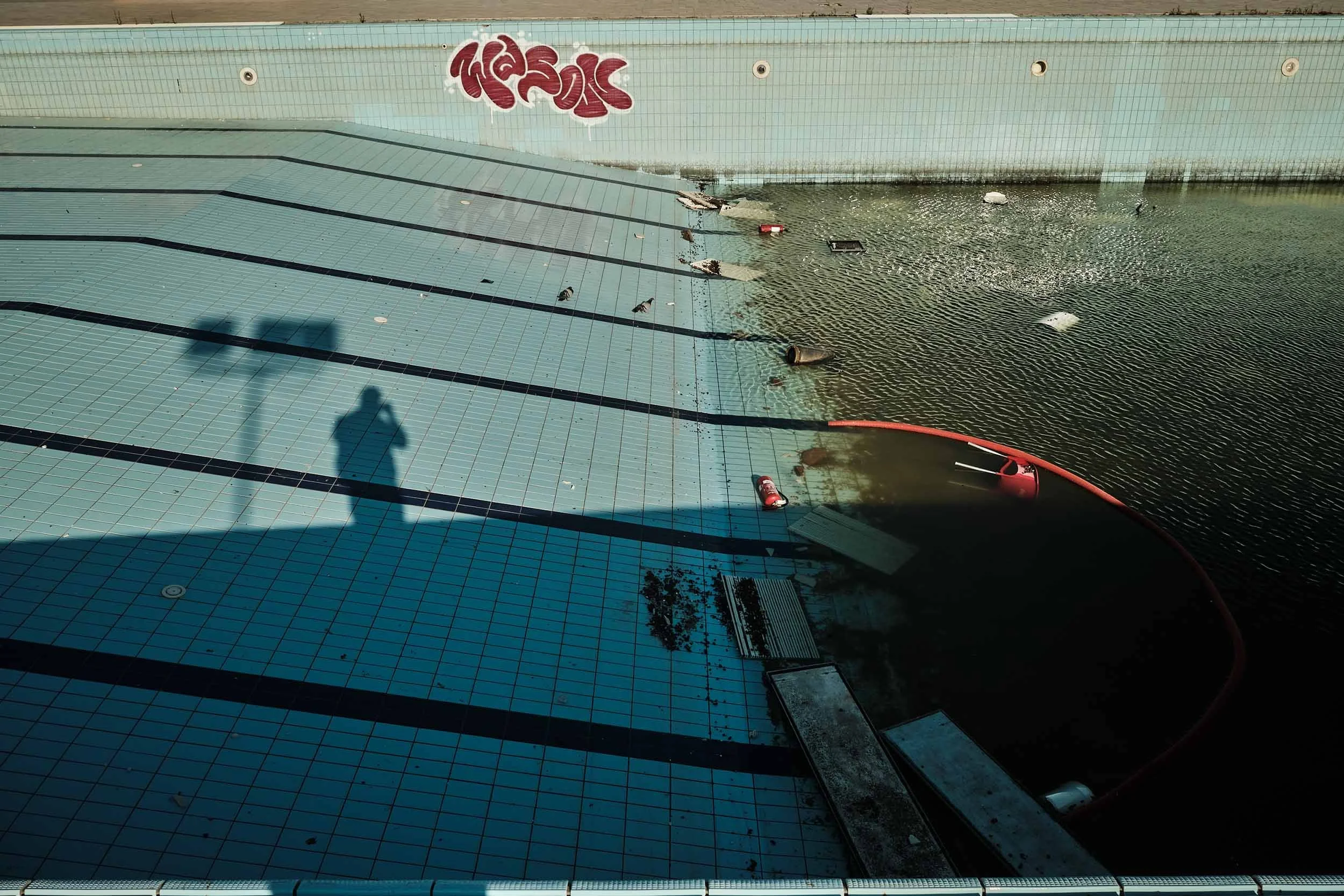

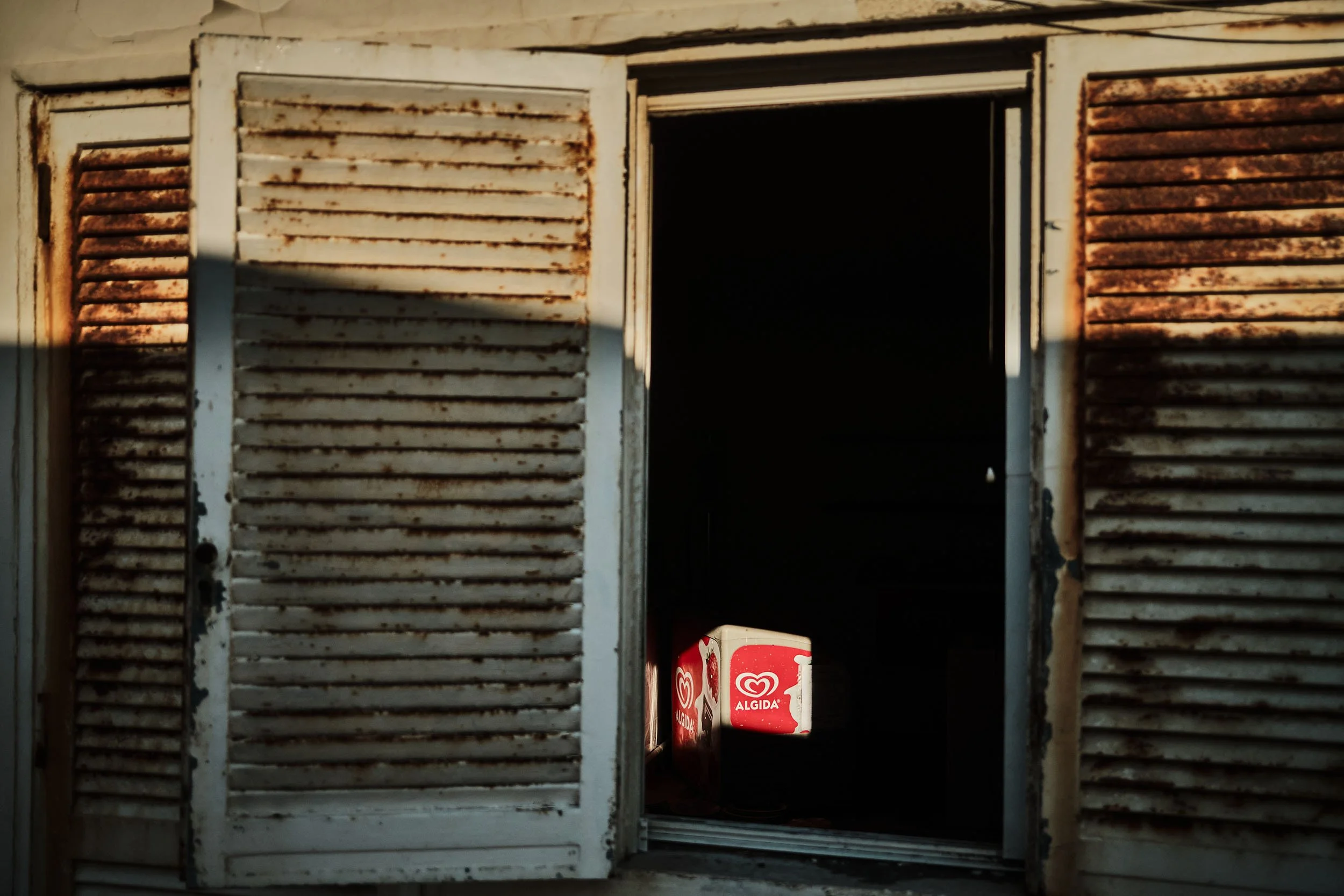
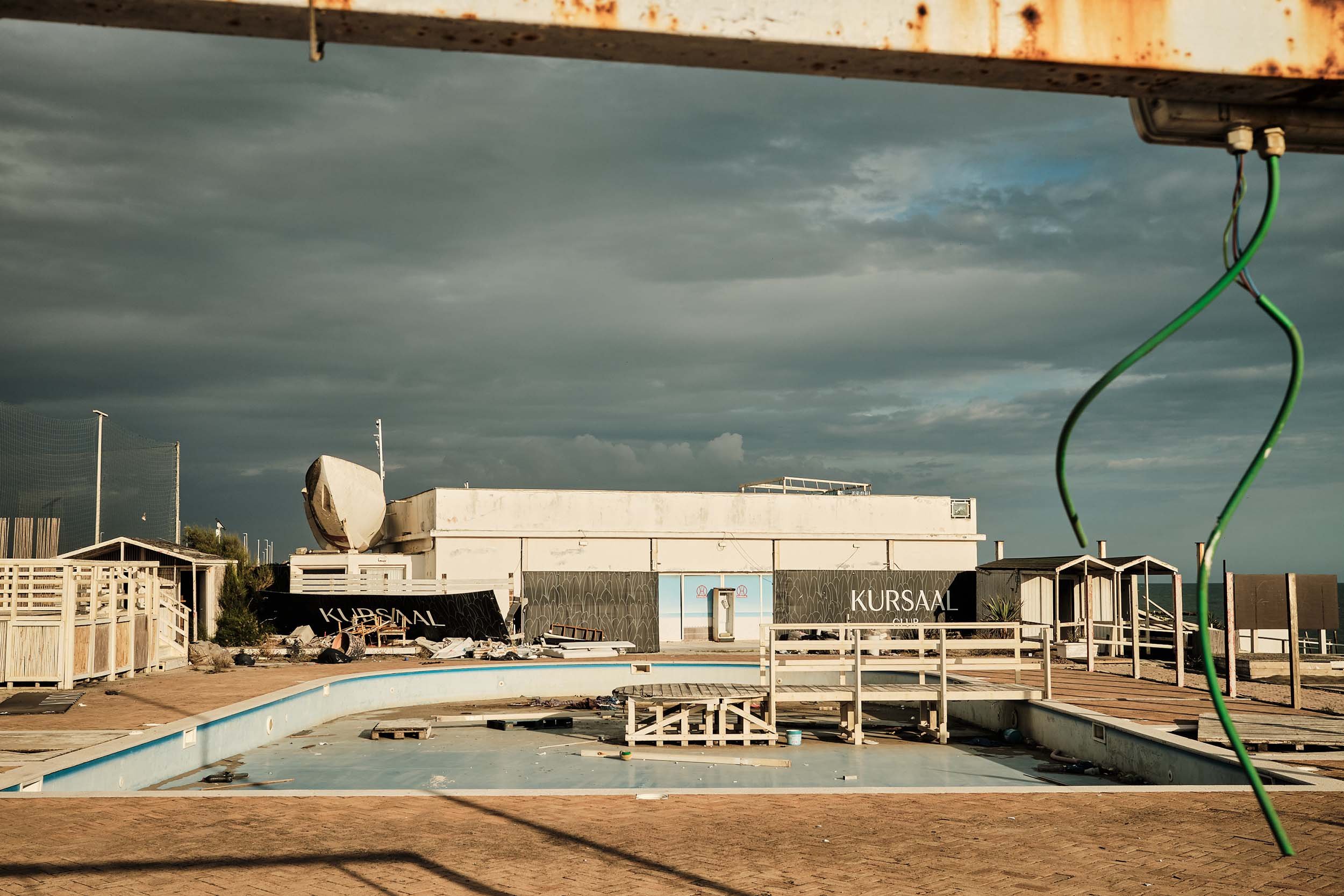
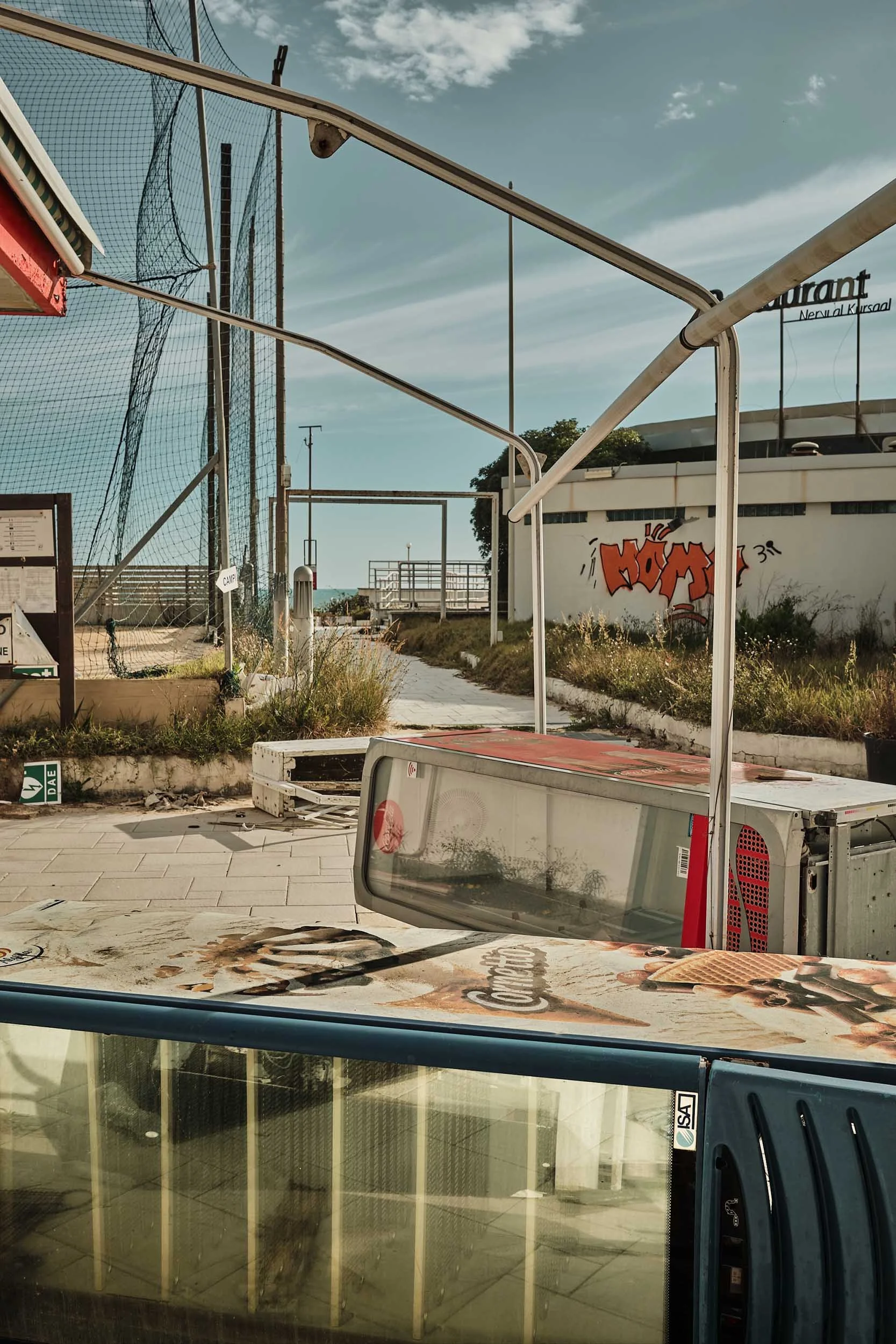


I Salabè, Ostia, and La Casetta
Responsibility, even when it eludes the courts, remains etched into the fabric of reality. History settles in; it does not disappear, even if the casual observer must strain to read it. Beneath this white blanket lies the sacred pain of the Salabè family. There remains the pain of Ostia, forced to watch historic architecture disintegrate under the weight of a bureaucratic and judicial debacle that never sought to hold anyone accountable. They tried to wipe everything clean, but the truth cannot be erased. It can only be buried under a patina of neglect. Just look beyond that white. Just push the development of the film a little deeper, forcing the light’s latency, to compel the past to resurface. Atrocities never disappear entirely.
I was quite taken aback when, while processing the RAW file—the digital negative—the words “La Casetta” appeared, complete with its historic logo. A piece of Ostia’s history. And yet, there it is. Historical truth always finds a way to come to light; you just have to look for it.

The project will be updated in the coming days.
My visual exploration constantly examines the tension between architectural space and relational space, applying itself across all narratives. The roots and structure of this approach are laid out in my cultural manifesto, R.O.M.E.