Sony RX10 Mark IV: The Ultimate Bridge Camera and a Hands-On Review
Sony RX10 Mark 4
The last of its kind. The last bridge.
The last of the bridge cameras. Once an extremely crowded market segment, today there are only a handful of models left on the market.
And yet, in this latest version, Sony really has thrown everything it could into it.
Let’s be clear: this is a car that’s been around for a few years now, having been unveiled in September 2017, but it remains remarkably relevant.

The camera body is large enough to be comfortable, yet compact enough for everyday use. The top display is extremely convenient, and the tilting monitor is also a nice feature, even if it only tilts in one direction.
A one-inch sensor. Complete with “stacked” technology, just like on the Sony A9 Mark I. A high-quality 24–600 mm f/2.4–4 lens. With digital zoom, you can even reach a 1200 mm equivalent focal length
Stabilized, tropicalized.
It records in 4K and also has excellent slow-motion capabilities.
With a truly impressive macro function. If you're looking for a lens that covers such a wide range of focal lengths with this level of quality, this is the most compact, lightweight, and convenient option available on the market.

Note the numerous buttons on the top plate. These include two customizable buttons (C1 and C2) which, together with others on the back of the camera and an additional one on the lens barrel, allow you to customize the controls as you see fit. Unfortunately, this process requires a bit of time and experience.
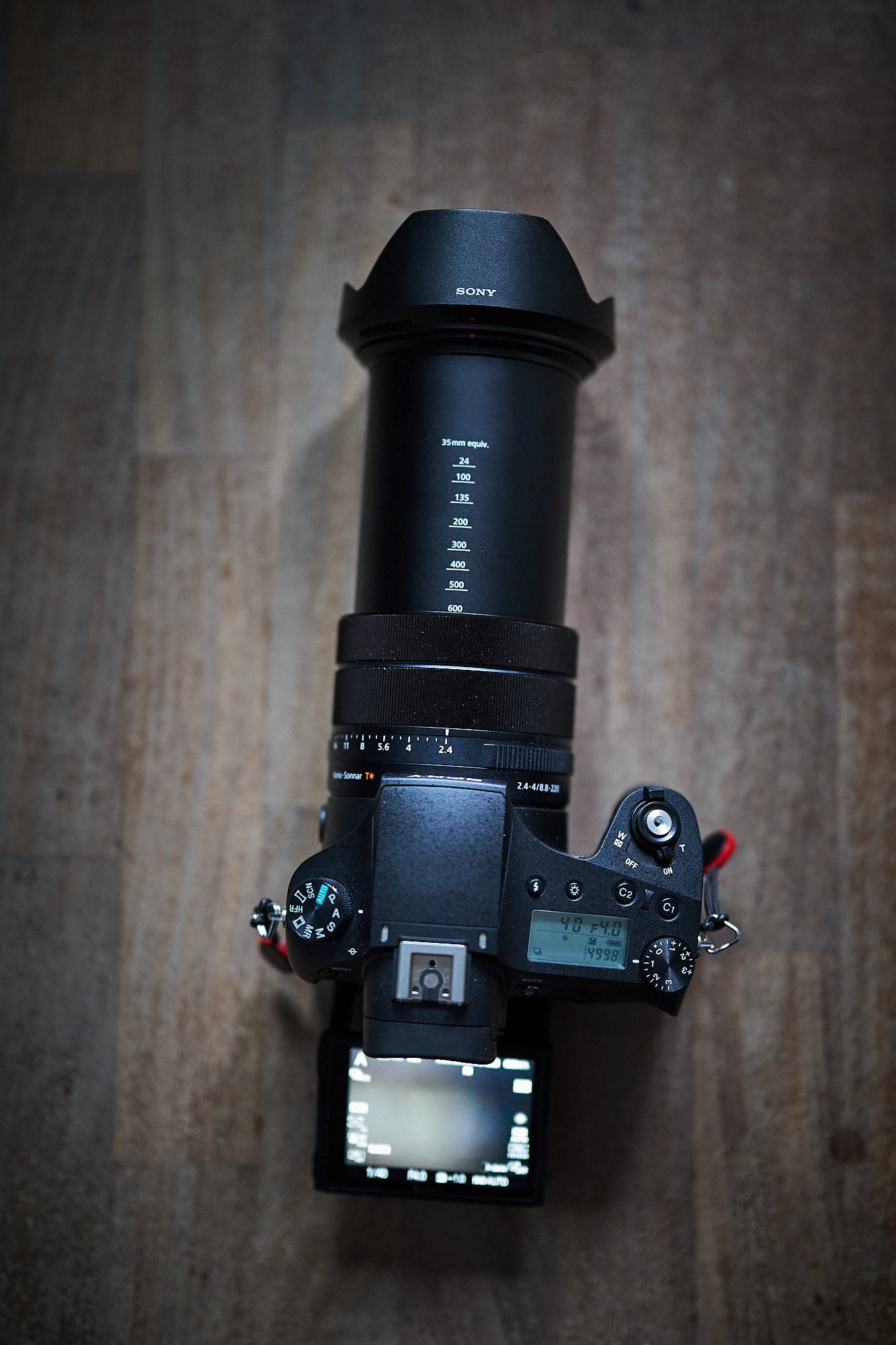
The zoom lens at its maximum focal length: an impressive 600mm f/4 equivalent

Sony RX10 Mark IV. Note the impressive brightness of the zoom lens
Design, ergonomics, and controls.
The fairly large body of the camera allows for a wide range of physical controls.
An aperture ring directly on the lens and a second ring conveniently positioned under the thumb of your right hand (on the back of the camera) allow you to quickly adjust aperture and shutter speed. A set of customizable buttons lets you tailor the camera to your specific needs.
Unfortunately, the menus remain Sony’s never-ending nightmare. These are the same ones used in the previous generation of cameras. In addition to the incredible number of pages and subpages, translation errors, and unnecessary complexity, it’s worth noting the lack of an initial distinction between the photo and video sections. That would have made things much simpler.
High-quality, premium construction. The finishes are good. Although, for €1,700, a few more touches wouldn't have gone amiss.
Stacked Sensor, Autofocus, and Light Meter
Herein lies the secret of this superb camera. These are features that have never before been seen on a high-end “compact” camera with such a wide zoom range. The readout time of the stacked sensor (i.e., the time it takes to transfer data collected by the sensor to the buffer and the image processor) is impressive, allowing you to always shoot with the electronic shutter without encountering flickering or distortion of fast-moving subjects. The electronic shutter, incidentally, reaches a speed of 1/32,000 of a second.
All this speed also has a direct impact on the autofocus and viewfinder, allowing you to track moving subjects without any blackout—even during burst shooting at a full 24 frames per second. And it does all this in complete silence… Just be warned: you’ll fill up a 128 GB SD card (I highly recommend an ultra-fast card) quickly… very quickly…
In short, it’s one of the very few stacked sensors on the market…and the benefits are clear to see. The exposure meter is consistently very precise, with the added bonus of extremely accurate highlight metering. Autofocus is excellent, especially in continuous mode. It boasts consistency and precision very similar to that of the first-generation Sony A9.

Sony RX10 Mark IV. Its continuous autofocus is on par with that of the Sony A9 Mark I. Which is a huge compliment.
The lens. The 24–600 mm Zeiss lens on the Sony RX10 Mark IV
The 24–600 mm f/2.4–4
I wouldn’t have expected such a high-quality lens. A 25x zoom, ranging from a fairly extreme wide angle all the way up to telephoto ranges typically reserved for wildlife photography—albeit made easier by the fact that it’s working on a 1-inch sensor—is an incredibly complex feat. This is further complicated by the need to manage the optical image stabilizer as well. And it’s made even more challenging by a rather advanced macro function. And yet the lens is truly remarkable. Sharp from corner to corner at any focal length and any aperture. Incredible, to say the least. This is the key element of an image quality that deeply impressed me. Its remarkable macro capabilities are also worth noting.
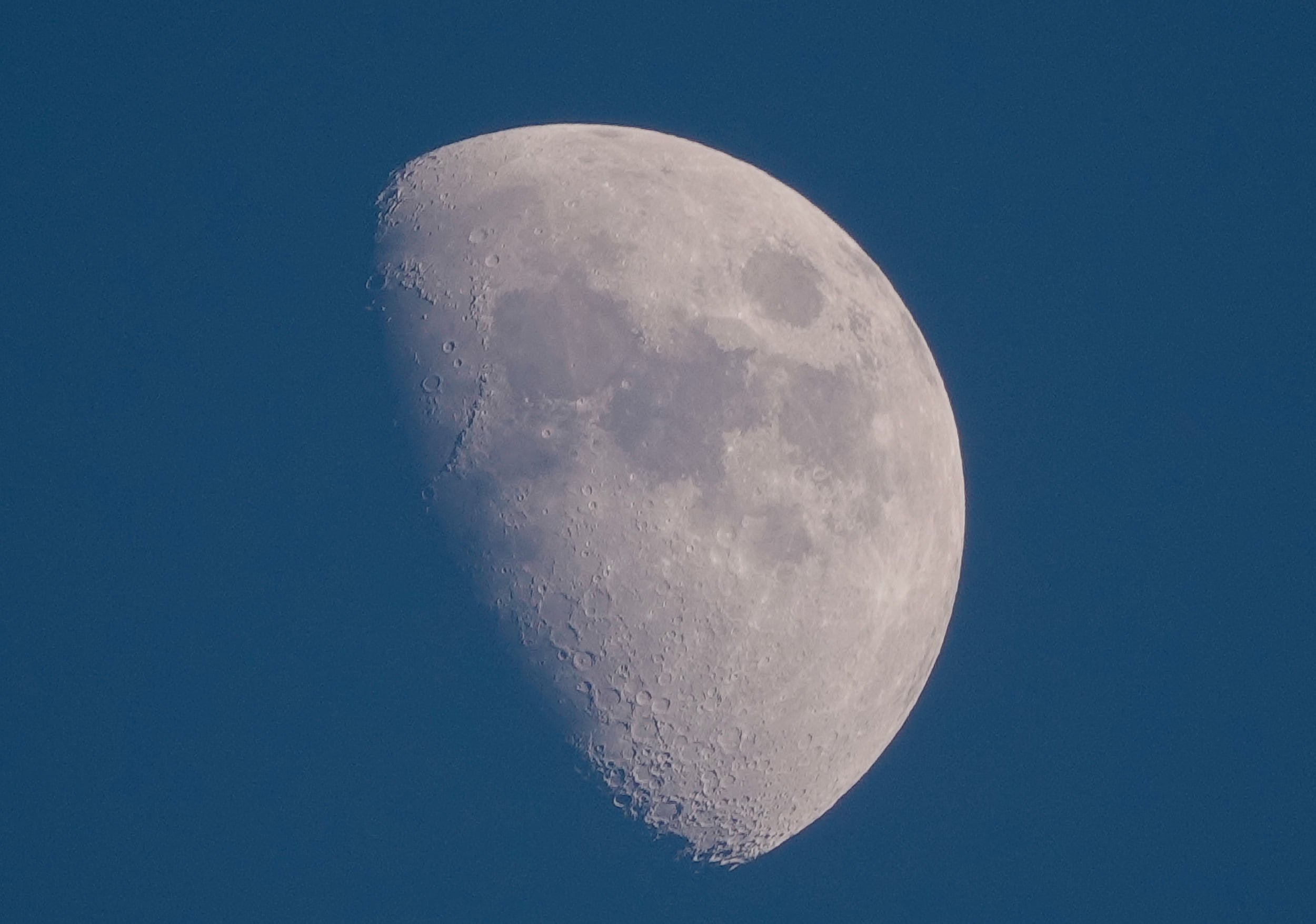
The moon photographed at a focal length equivalent to 1200 mm with the Sony RX10 Mark 4
On the field. Making the impossible possible. Image quality.
It simply has no rivals. If you’re looking for a portable, compact, and relatively lightweight camera—one you can use almost every day—with a similar focal range, you won’t find anything comparable in terms of image quality, speed, AF, and overall performance. Personally, I bought it for a very specific reason: to experiment with unique perspectives in the city, taking advantage of its extremely wide zoom range whenever the opportunity arises. But also to take advantage of an extremely wide zoom range in leisure situations. Or while traveling.
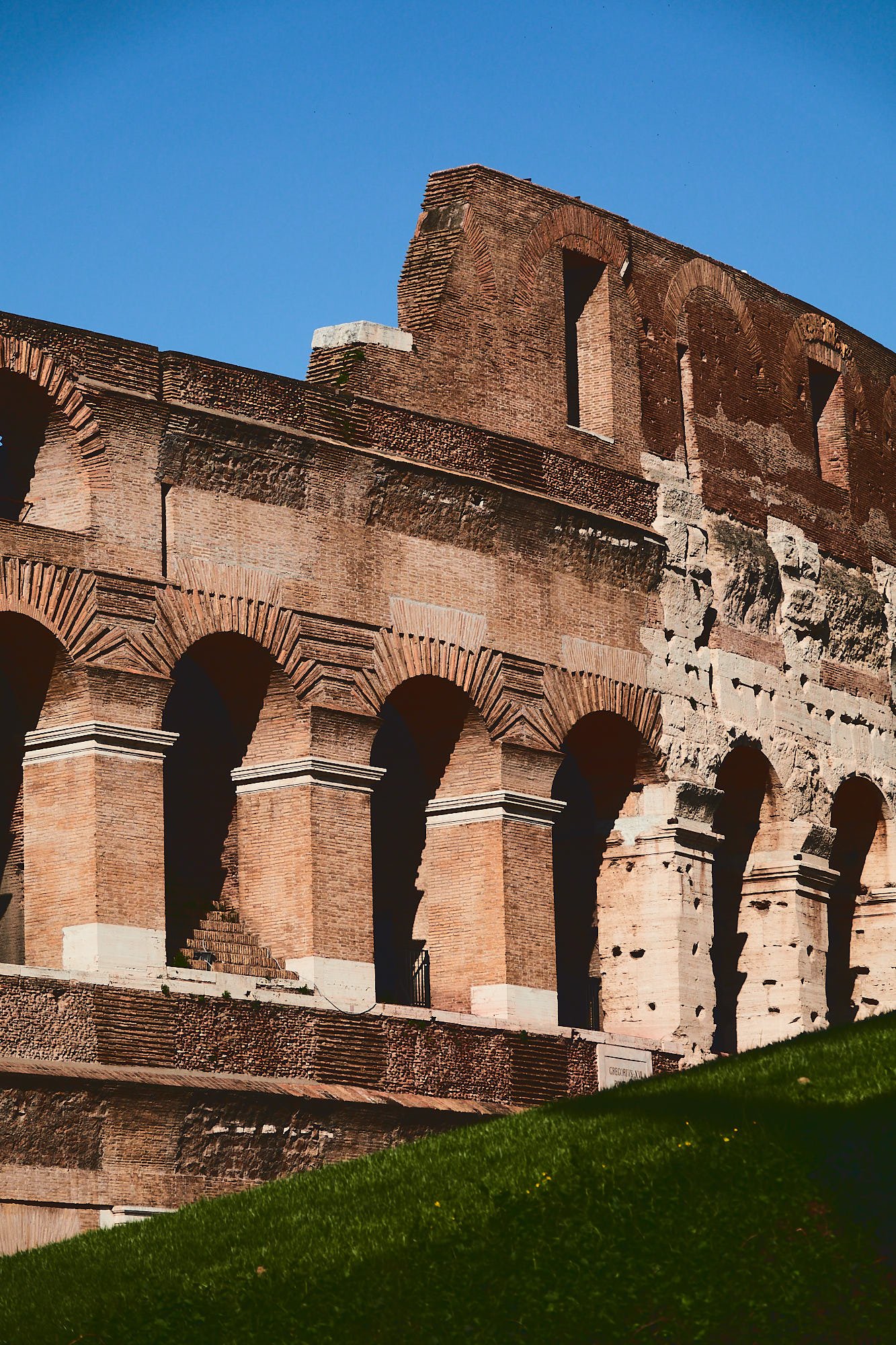
Colosseum, Rome
All this comes with absolutely incredible image quality, considering just how much this bridge camera is capable of. Of course, you need to be careful in backlit conditions—you can’t expect the same performance as, say, a Sony 100-400mm lens, a lens I’ve used extensively and know quite well. But when you look at the package as a whole, I find the image quality to be nothing short of superb.
The biggest limitation comes into play when you increase the ISO. The practical limits are ISO 6400 during the day and ISO 1600—or, in truly extreme cases, ISO 3200 in the middle of the night.
If you consider that 19 years ago, for the same price, a Nikon D70 with an APS-C sensor (which is much larger—about four times larger) was limited to ISO 1600…and had only 6 megapixels…electronics has come a long way since then.

Speed, compactness, versatility, and an extreme focal range. All in a discreet camera that lets you shoot without a shutter sound. All it asks of you is a little patience as you navigate the world’s most baffling menus. It’s absolutely worth it.
Real-Time Tracking—which is essentially a feature of the continuous autofocus system that recognizes the subject you’re framing and keeps it locked in focus as long as you hold down the shutter button or the dedicated focus button—is extremely effective. It takes a moment to get the hang of its settings, but once you do, you’ll be thrilled by how easy it is to use. And its reliability is truly impressive. Not having to think about focusing anymore is truly extraordinary.
That’s the key to this machine: versatility and operational efficiency. The only downside is that you have to spend a little time getting to know it…especially its menus and programmable settings.

Playing at 600 mm…


On the road, on the go.
That’s the camera’s real strength. I wrote this review while walking around my usual streets in Rome. The huge focal range lets me see perspectives and angles I’d never seen before. And yet I’d walked down those streets thousands of times.
The Sony RX10 IV is a unique camera, offering unmatched versatility in both photography and video. It takes time to learn how to navigate all the vast possibilities it offers. The zoom range is so extensive that it’s easy to get lost in it. But if you take the time to master it, it will reward you with incredible shots and possibilities. Let yourself be swept away by the possibilities the Sony RX10 IV has to offer.
Pros & Cons
Advantages
Top-quality optics, excellent at any aperture and any focal length between 24 and 600 mm. A stacked sensor that enables an extremely fast readout time. An electronic shutter usable in any situation, reaching 1/32,000 of a second and completely silent. Weather-sealed camera body. Accurate exposure meter. Comfortable grip. Well-designed controls. Excellent image quality relative to the sensor size, enhanced by optics that are nothing short of amazing. More than decent battery life (about 500 shots per charge). Excellent video quality with outstanding and extremely interesting slow-motion options. Impressive 24-frame-per-second burst mode. Digital zoom reaching an impressive 1200mm equivalent while maintaining good quality (JPEG only). Excellent JPEGs in Superfine quality. Significantly greater depth of field compared to full-frame (a little over 2.7 stops of advantage, at a glance), allowing you to work with very wide apertures almost all the time. Decent workability of files at medium and low ISO sensitivities (surprising given the sensor size)
Defects
Confusing and difficult-to-understand menus. A decent viewfinder, but a bit outdated given the camera’s quality. Noticeable diffraction starting at f/5.6 and beyond. Avoid going beyond f/8 if possible. Practical ISO sensitivity is limited to 6400 in broad daylight and 1600 ISO in the dead of night. Slight zoom lag. Touchpad is not very responsive, and the touchscreen implementation is questionable. JPEGs are somewhat underwhelming—great quality but lack impact. You really need to shoot in RAW.


Conclusions
This is a truly unique piece of equipment. To find something comparable in terms of focal length range, you’d inevitably need a system with interchangeable lenses—and you’d have to carry more and more lenses with you. Unless you’re willing to significantly increase your expenses, costs, and bulk, it’s practically impossible to find a combination that matches it in image quality, size, weight, and operational speed. The last of its kind, the final bridge camera likely to hit the market, is nothing short of extraordinary. It hits the mark. It achieves a balance I frankly didn’t think possible. A true gem. We’ll miss them in a few years. If you can, grab one now. I don’t think it will be replaced by a new model. The last of its kind, indeed. And for travel, street, and creative photography, it’s a priceless tool.


This visual exploration of the geometry and possibilities of the street continues. Sign up so you don’t miss the next installment.
